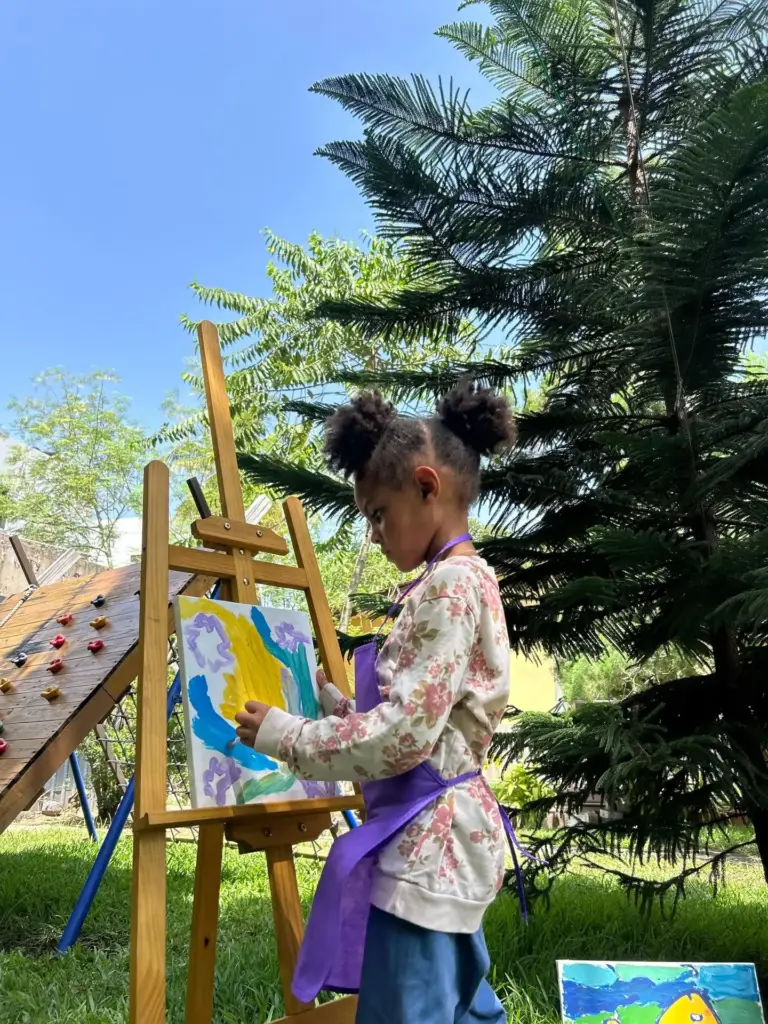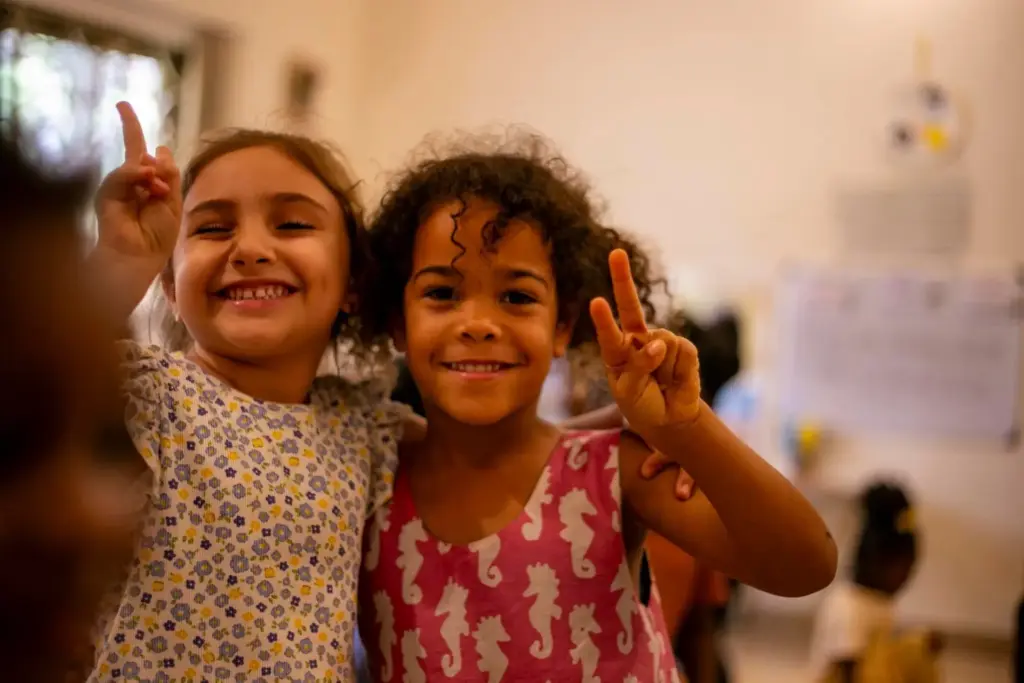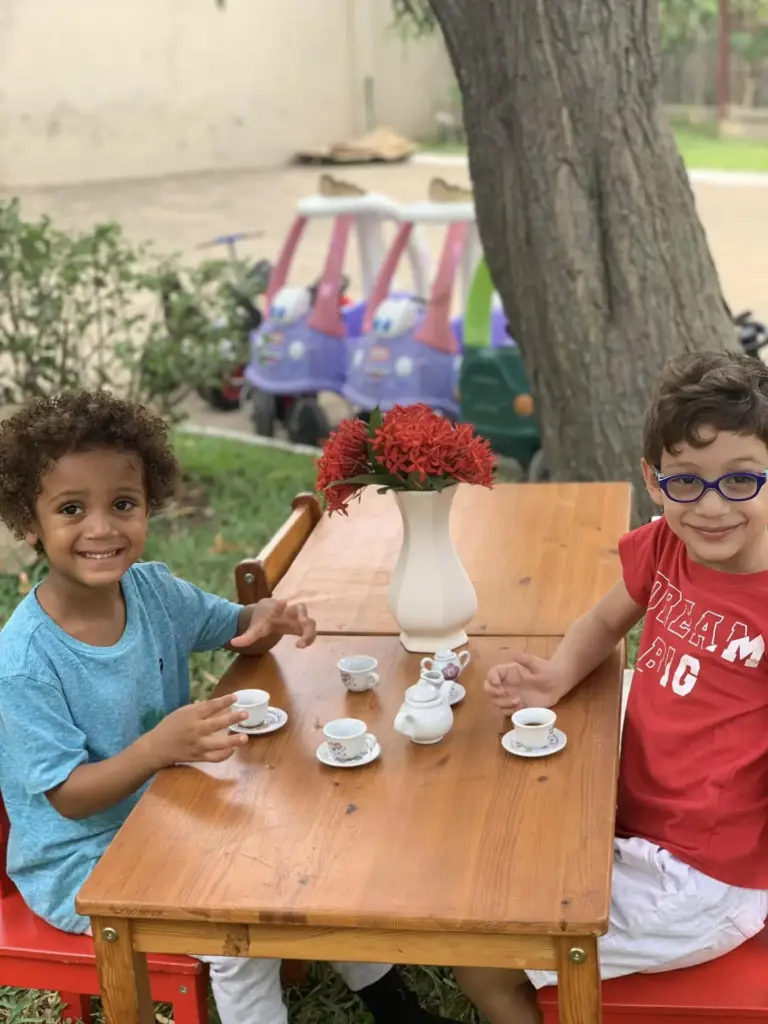
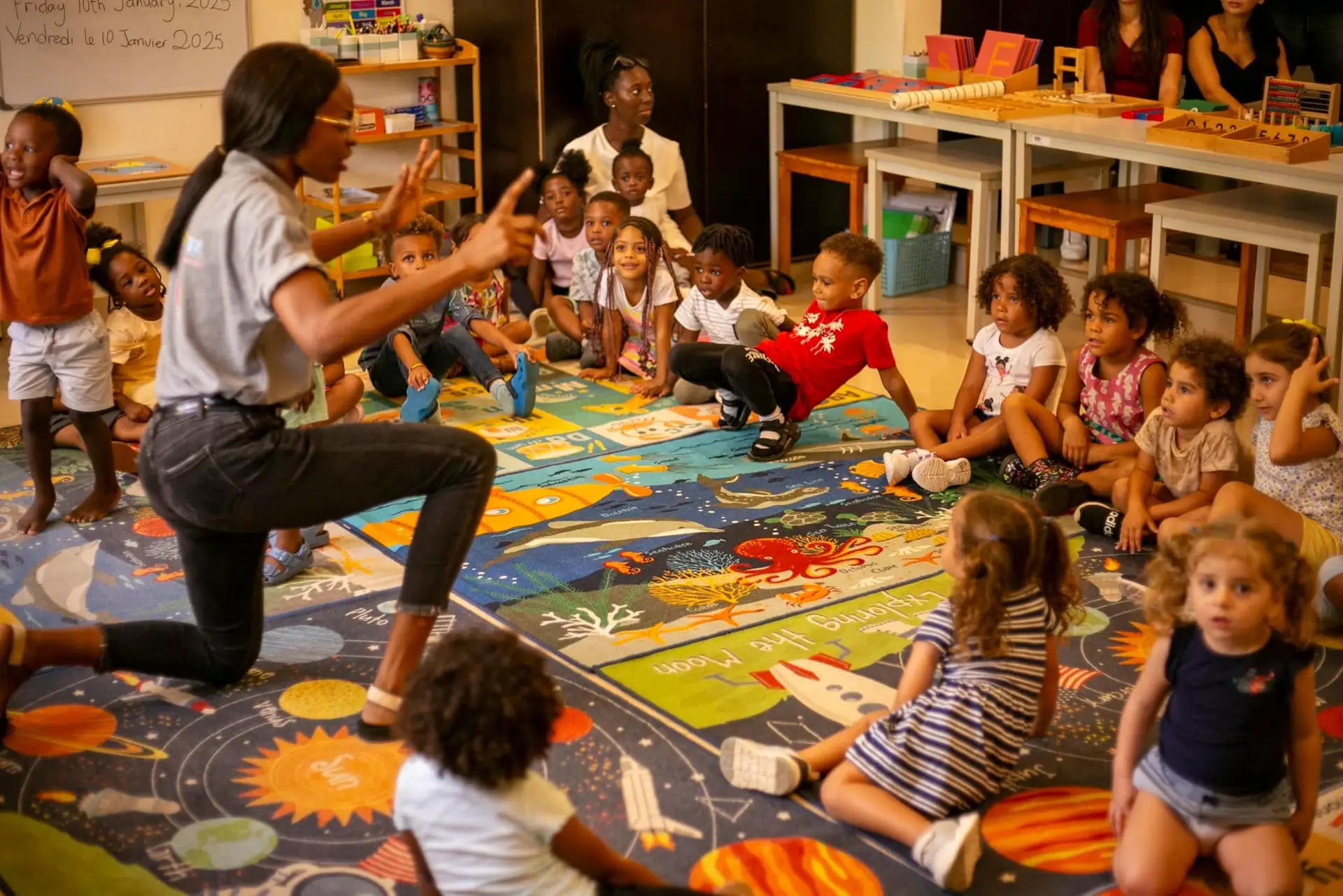
Walk into a Montessori classroom expecting rows of desks and a teacher at the board, and you’ll be surprised. Children are spread around the room. One is pouring water from a small jug. Two are building a tower of pink cubes. Another is tracing sandpaper letters with her finger. The teacher is kneeling beside a child, showing him something quietly.
How a Montessori classroom works
The room is the curriculum. Everything is at child height and every material has its place on the shelf. Children are free to choose, but within clear limits: they take one activity at a time, finish it, and put it back. That simple routine teaches concentration, order and responsibility long before any worksheet.
Materials are grouped into five areas: practical life (pouring, buttoning, cleaning), sensorial (shapes, colours, sizes), language, mathematics, and culture (geography, science, music, art). Each material teaches one idea, and children can see and correct their own mistakes.
What the teacher does
A Montessori teacher watches closely and guides rather than lectures. She introduces a new material when a child is ready for it, usually one-to-one or in a small group, then steps back. The goal is a child who says, “I did it myself.”
Is Montessori right for my child?
Most children thrive in it, whether they’re quiet and focused or busy and curious. Parents in Accra often ask whether Montessori children are ready for primary school. By five or six, children usually read, count, write their names and, just as important, can concentrate, follow instructions and look after themselves.
The best way to judge is to see it. Visit a classroom during the morning work cycle and watch for ten minutes. You’ll know.